
MusicNT and 8CCC present the NT Music History Podcast Project.
For three decades, music has pulsed through the heart of the Northern Territory in pub back rooms, on festival stages, under wet season skies. Territory sounds: a visual history celebrates that legacy through thirteen striking photographic works, drawn from MusicNT's archive and the Hot Shots photography competition, now on display across four public sites in the Darwin CBD and northern suburbs.
From candid backstage moments to electric live performances, these images capture the artists, venues and communities that have shaped the Territory's sound. Presented by MusicNT in partnership with the City of Darwin, this free public exhibition invites you to wander the city and rediscover three decades of NT music history.
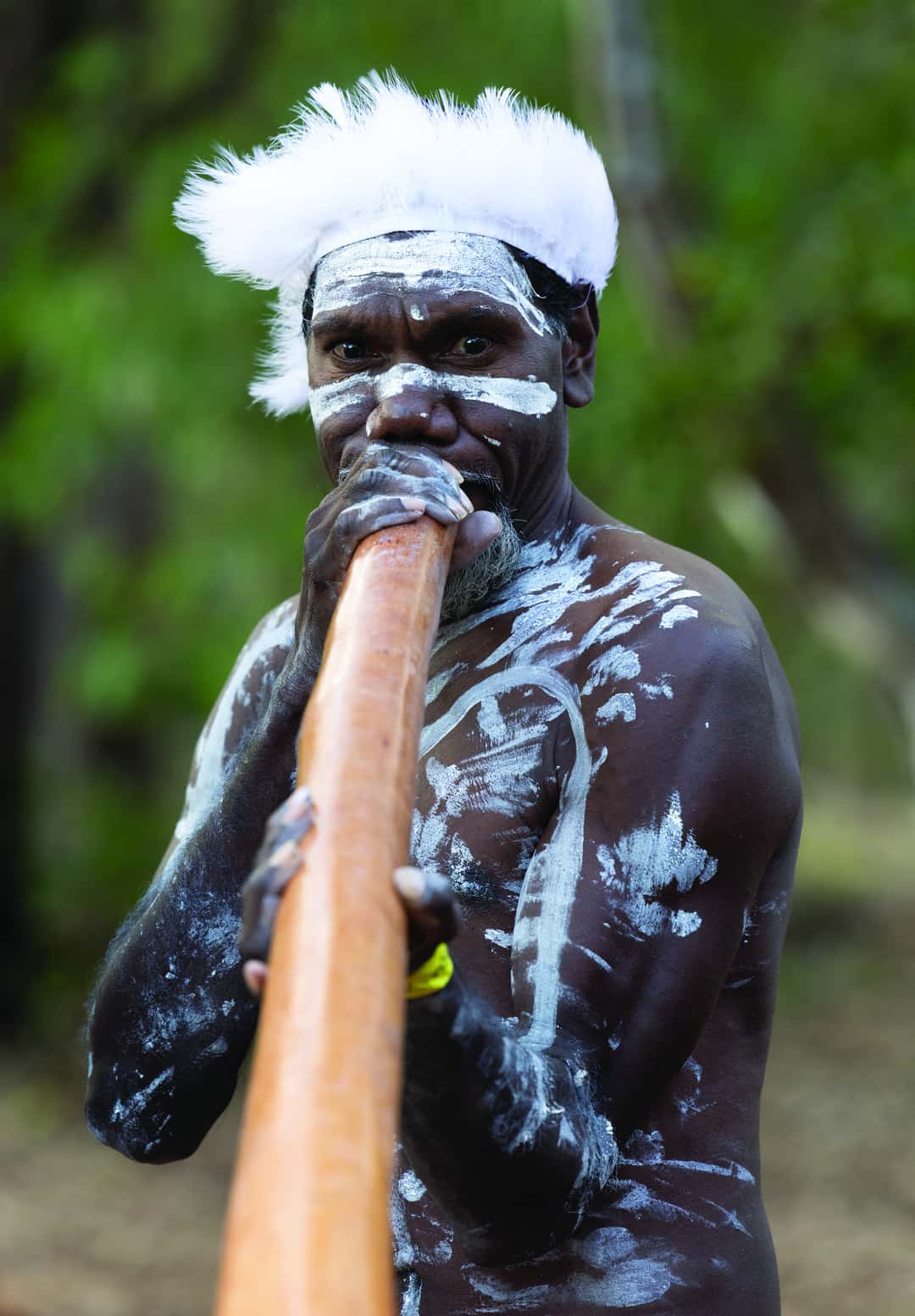
Larry Gurruwiwi
Photo by Sophie Ansel
Read more + Read less −
This photograph captures Larry Gurruwiwi warming up for Bunumbirr, the Morning Star ceremony, one of the most significant songlines connecting clans across Arnhem Land and beyond. The yidaki in his hands is a living connection to Country, carrying the ancestors through his breath in a single note. This is Yolŋu manikay (sacred song cycles) as it has always been: not performance, but law. Son of the legendary Djalu Gurruwiwi, custodian of the yidaki, Larry has inherited both the instrument and the responsibility that comes with it.
Larry Gurruwiwi is a Galpu clan man from East Arnhem Land - cultural leader, yidaki master, and frontman of Malawurr Band. Following in the tradition of his father Djalu, Larry teaches Yidaki to enthusiasts from all over the world and practises culture to keep the knowledge alive. Through Malawurr Band, he carries that same practice into contemporary music - Yolŋu manikay meeting modern sounds, each informing the other.
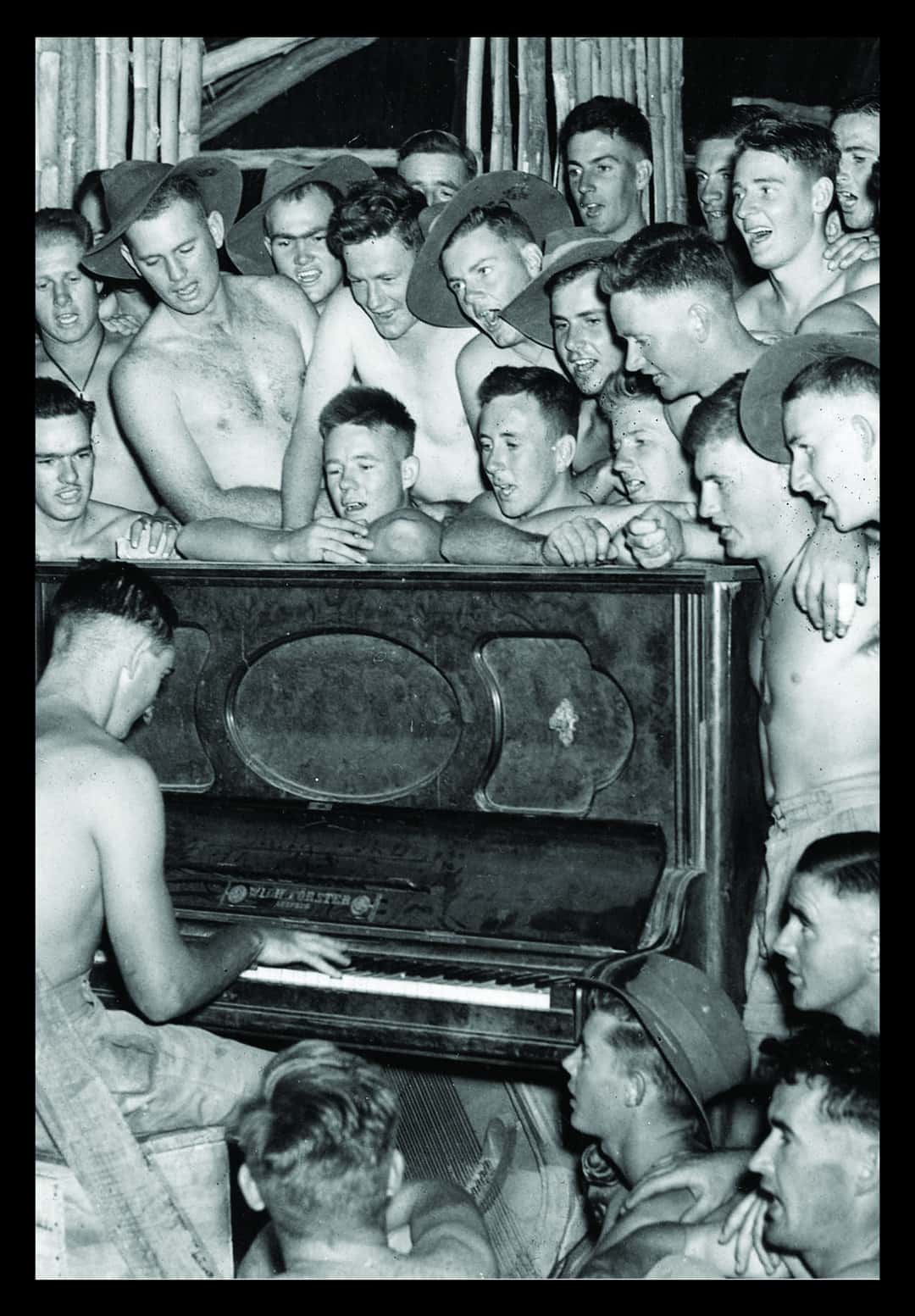
A Community Sing Song Around the Amenities Hut Piano
Photographer unknown, State Library Victoria
Read more + Read less −
Darwin, 1943. The Territory is under wartime occupation and the northern sky has seen Japanese bombers. But here, around a battered piano in an Amenities Hut, people are singing. They always sing. Preserved in the State Library Victoria, this is one of the oldest images in this exhibition - and it asks a simple question: when has the Territory ever stopped making music?
The Argus was a Melbourne daily newspaper published from 1846 to 1957. This image is held in the State Library Victoria collection. Photographer unknown.
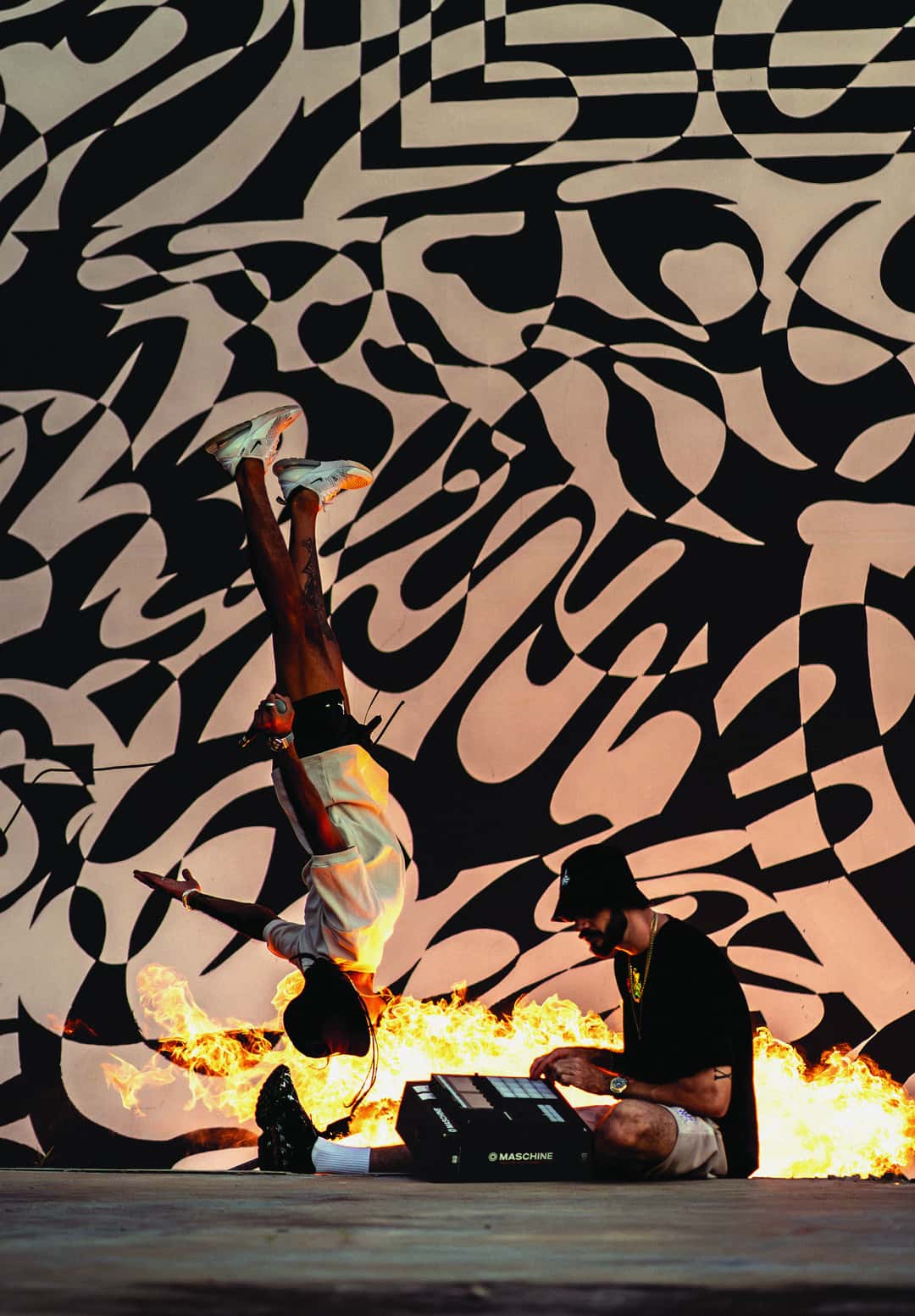
PaccRecord$ x Flowpyre
Photo by Kacie Austin
Read more + Read less −
Nobody planned this. Pxpkxrn is mid-backflip; SizzMacc is on the Maschine beneath him; and somewhere behind the concrete ledge, Flowpyre is throwing lycopodium fire at both. Photographer Kacie Austin caught it all at Dashwood Place in front of Hari Hari's sweeping monochrome mural - three different Darwin creative worlds colliding on a free Saturday afternoon, which is exactly how things should happen.
PaccRecord$ is an independent, multicultural music and arts label operating on Larrakia land in Darwin. Bringing together hip-hop, R&B and alternative rap, the collective - pxpkxrn, SizzMacc, K-Lean, The Kid Fez and others - has built a grassroots following through live shows, releases including their LP !n The Pacc We Trust, and their own line of streetwear. Flowpyre is a Darwin fire artist, flow performer, and photographer, and a fixture of the city's creative underground from Mindil Beach Markets to impromptu collaborations like this one.
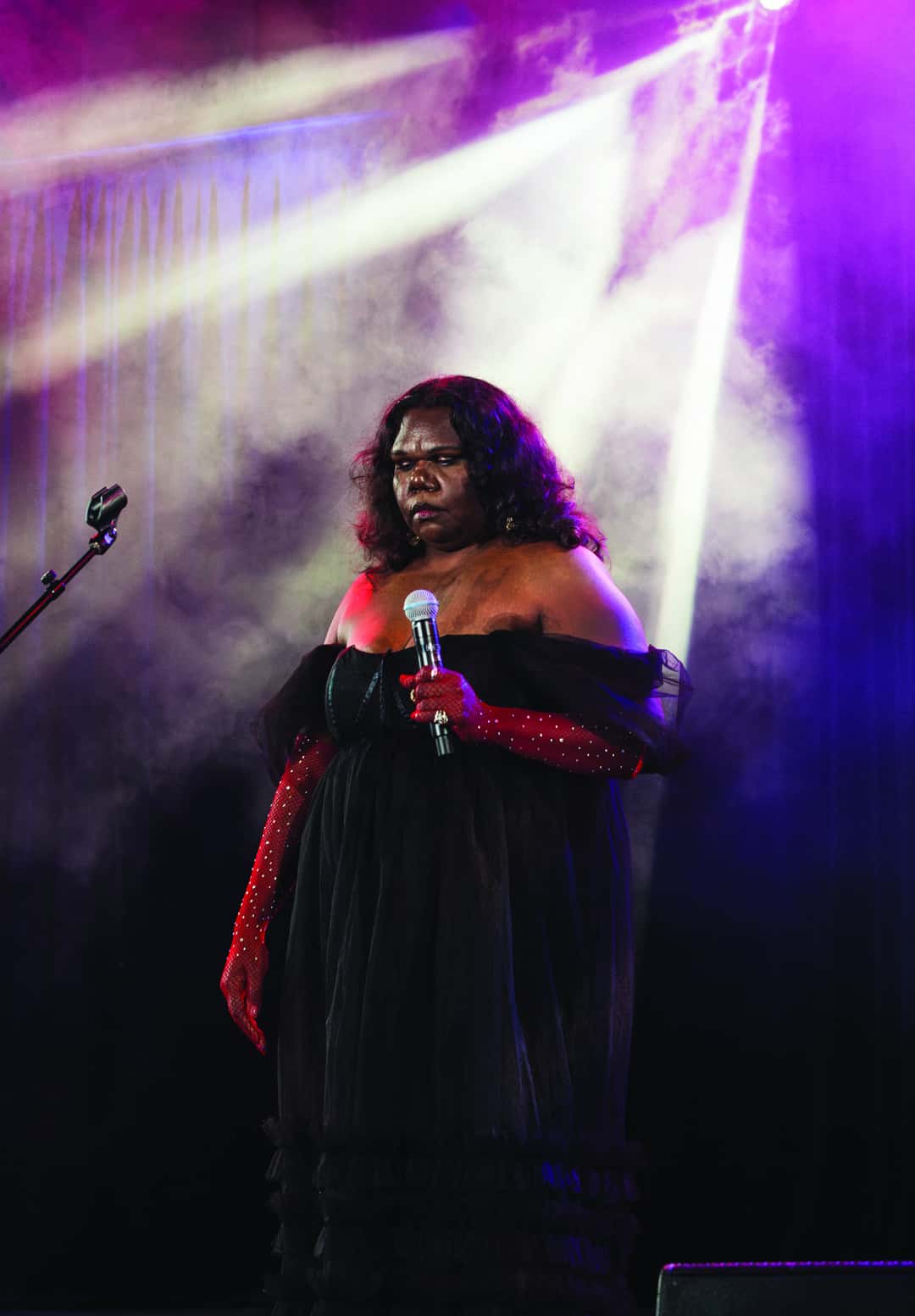
Eleanor Jawurlngali Dixon
Photo by Leicolhn McKellar
Read more + Read less −
This portrait captures the powerful presence of Eleanor Jawurlngali Dixon, a multidisciplinary artist and storyteller from Marlinja, Northern Territory. The image embodies the spirit of her deep listening practice, showcasing a contemporary cultural custodian who masterfully carries the ancient stories of her ancestors into bold, experimental territories.
Eleanor Jawurlngali Dixon is a defining contemporary voice deeply anchored in her Mudburra and Garrawa heritage. Her musical journey gained momentum through MusicNT's Bush Bands program and the family duo Rayella, before she achieved widespread national acclaim as the frontwoman of electronic-folk collective Kardajala Kirridarra. Performing under her traditional name, Eleanor Jawurlngali, she continuously reshapes the Australian sonic landscape. Her recent, ethereal collaborations with guitarist Mick Turner (Dirty Three) and cellist Stephanie Arnold weave Mudburra language with expansive instrumentation, cementing her legacy as a fearless, genre-defying creator.
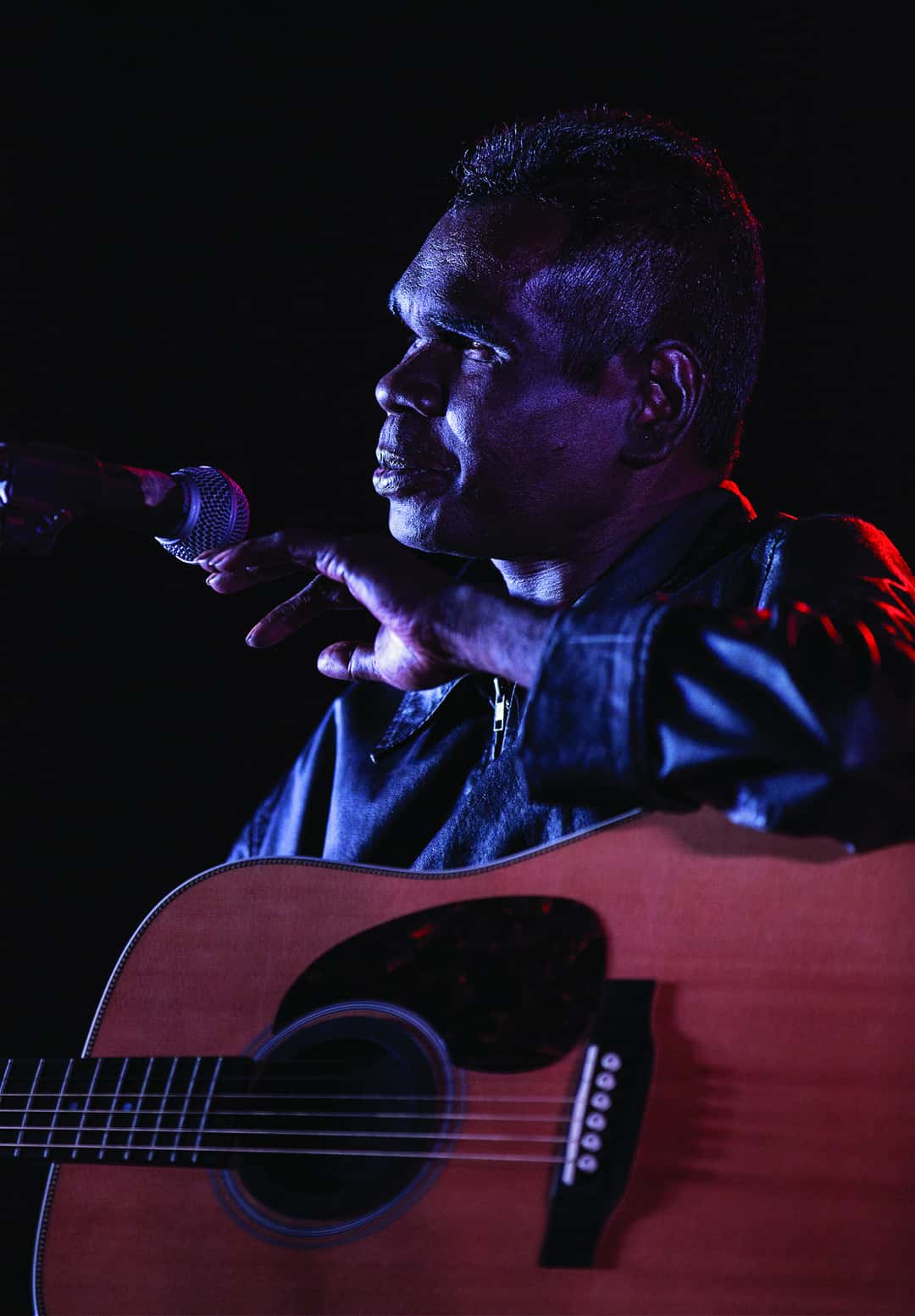
Geoffrey Gurrumul Yunupingu
Photo by Glenn Campbell
Read more + Read less −
Glenn Campbell's image from the NIMAs stage in 2013 shows Geoffrey Gurrumul Yunupingu doing what he did better than almost anyone: making a room go completely still. Blind from birth, playing guitar upside down, singing in Yolŋu Matha in a voice that seemed to come from somewhere beyond the ordinary reach of music, Gurrumul was unlike any other artist. This photograph embodies his timeless irrepressible spirit.
(Yolŋu Matha means “the Yolŋu tongue” and is a linguistic family including several languages spoken by First Nation peoples of Northeast Arnhem Land)
Geoffrey Gurrumul Yunupingu (c.1971-2017) was a Yolŋu man from Galiwin'ku on Elcho Island, Arnhem Land, whose voice was recognised as one of the most extraordinary in the history of Australian music and was cemented as such when he was conferred an Honorary Doctorate of Music by the University of Sydney in 2012. His recordings reached international audiences, and he performed for world leaders. In 2026 he was posthumously inducted into the ARIA Hall of Fame, his family taking the stage to perform Djarimirri in his honour. He is gone, and the silence he has left behind still reverberates.
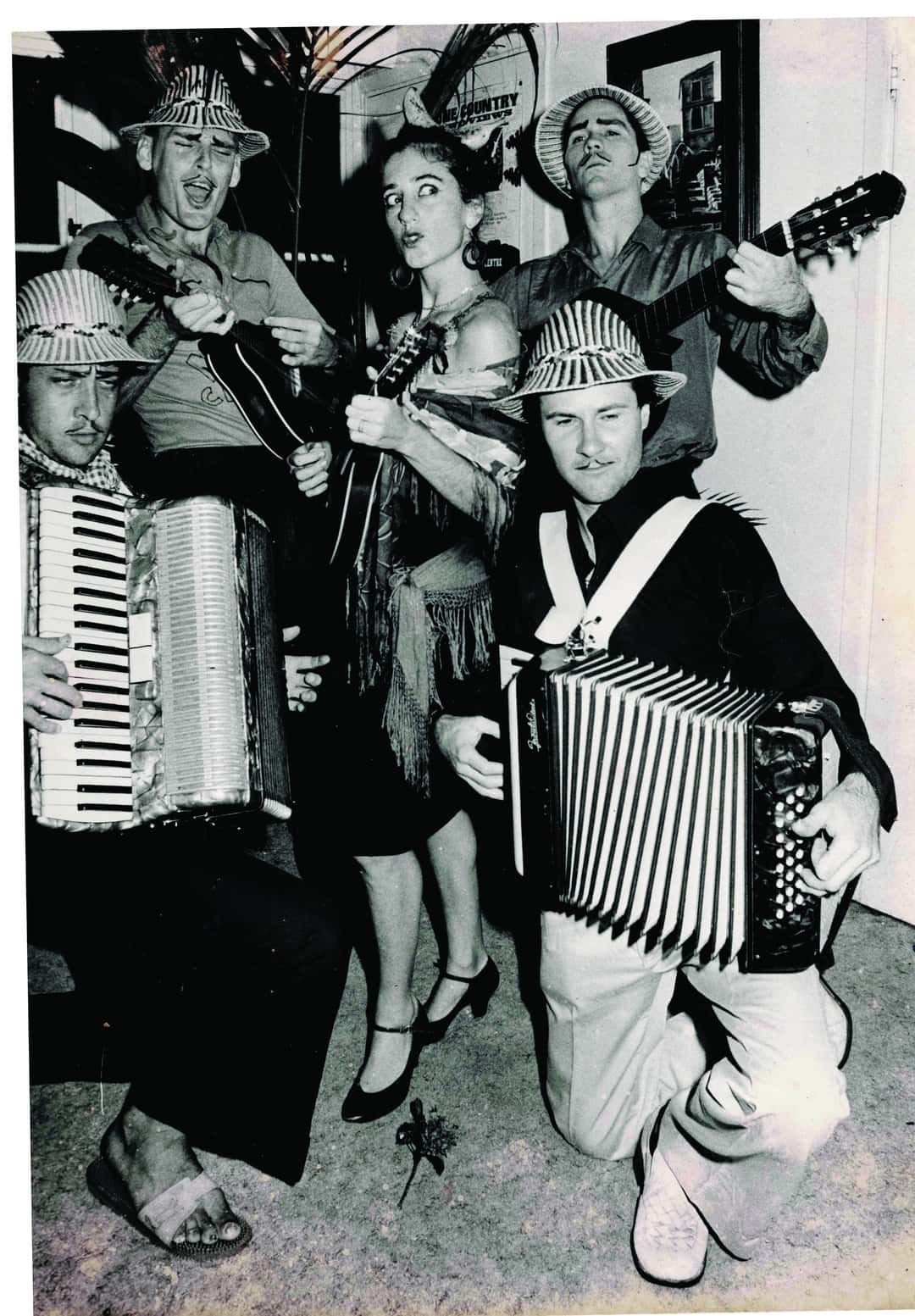
Mort Chiados
Photo by Simon Simeone, NT News Archives
Read more + Read less −
This vibrant archival photograph captures the eccentric spirit of Mort Chiados, a theatrical folk-cabaret band that lit up Darwin's underground music scene in the 1980s. Dressed in matching striped hats and expressive costume attire, this photo of the five-piece ensemble radiates a chaotic, joyful energy. With accordions squeezed mid-bellow and stringed instruments in hand, their wide-mouthed, passionate pose captures a distinct era of Darwin's cultural history - one defined by raw, community-driven fringe art and rebellious, top-end bohemian creativity. Pictured from top left, clockwise: Brutto Mort Chiado (Todd Williams), Stella Maris Marinara (Gail Evans), Gianni Mort Chiado (Bill Searle), Elvis Mort Chiado (Michael Havir) and Tommasso Mort Chiado (Tom Maranucci).
Emerging from the close-knit, post-Cyclone Tracy creative resurgence of the 1980s, Mort Chiados was a beloved fixture in Darwin's local venues and festivals. Known for their acoustic multi-instrumentalism and satirical, high-energy performances, the band fused folk traditions with a distinctly irreverent Territory attitude. They stood as a testament to the quirky, fiercely independent artistic counter-culture that helped shape the modern identity of the Top End's capital.
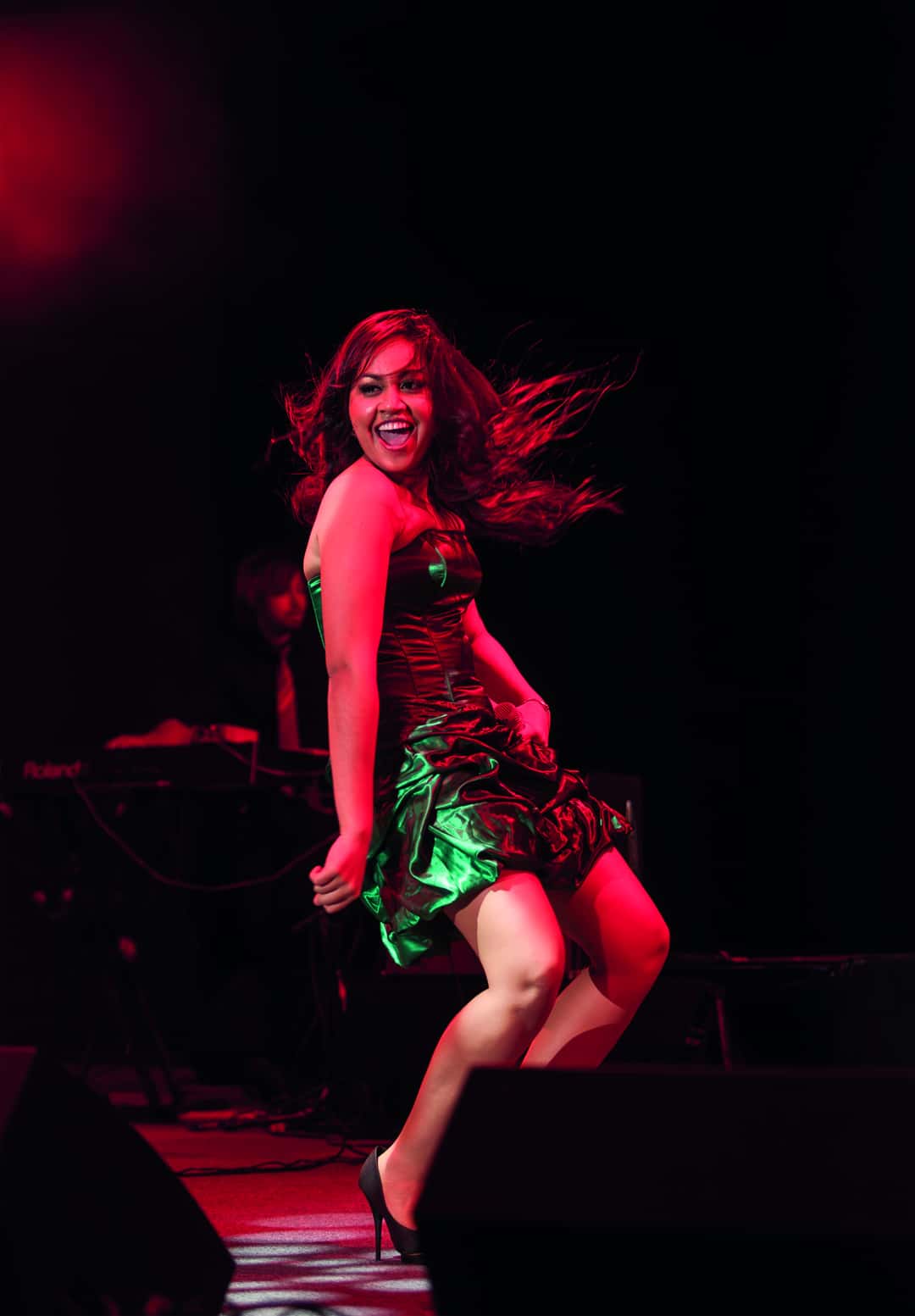
Jessica Mauboy
Photo by Glenn Campbell
Read more + Read less −
Photographer Glenn Campbell captures Jessica Mauboy in full flight under the lights of the National Indigenous Music Awards (NIMAs). Evocative and electric, the portrait captures the raw, joyous, kinetic energy of a Darwin-raised, nationally celebrated icon returning to the stage that knew her first. Campbell's lens frames a profound moment of homecoming; before Mauboy even sings a note, her commanding stage presence and deep connection to the local crowd reverberate through the amphitheatre, bridging global stardom with community roots.
A Tiwi Islands and Indonesian-heritage woman raised in Darwin, Jessica Mauboy became a household name after Australian Idol in 2006 and never stopped. Multiple ARIA Awards, an acclaimed acting career, and a Eurovision appearance have followed, but the NIMAs stage has always felt like home. In 2025 she was inducted into the NIMAs Hall of Fame.
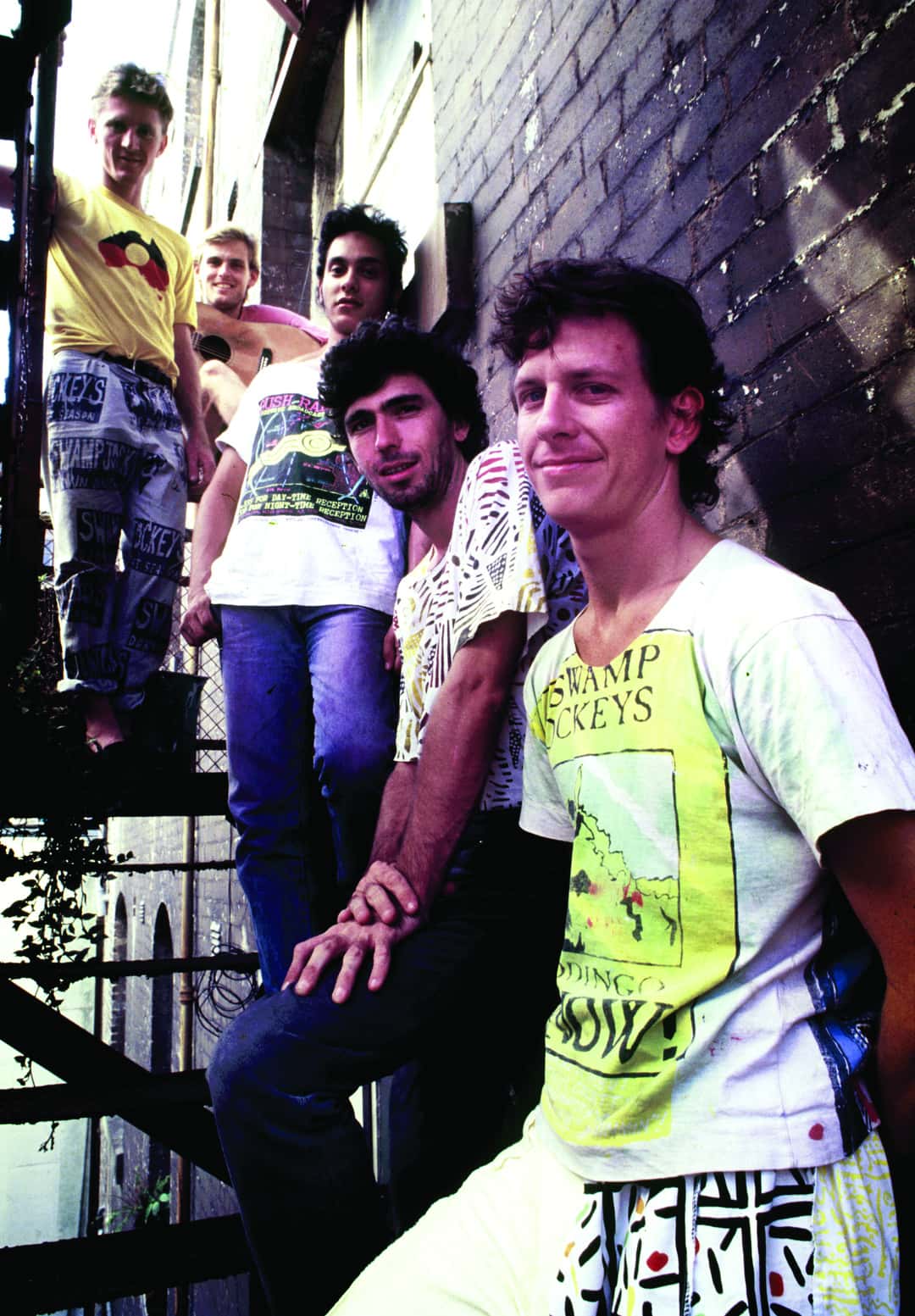
The Swamp Jockeys
Photo by David Hancock
Read more + Read less −
Darwin in the mid-1980s had a pub rock scene that was raucous and untamed, and the Swamp Jockeys were at the centre of it. Formed in 1985, they played the pubs, toured the Territory, and built a fierce reputation as one of the best live acts in the Top End. David Hancock photographed them in Sydney in the summer of 1985/86 - a band full of energy, entirely in their element.
Formed in Darwin in 1985, the Swamp Jockeys were Todd Williams and Michael Wyatt on vocals, Cal Williams on lead guitar, Stuart Kellaway on bass, and Andrew Belletty on drums. Their contribution to Australian music history is measured not only in the legendary gigs they played, but also in what grew from a chance meeting in Arnhem Land - Yothu Yindi, one of the most important bands this country has ever produced.
Ted Egan
Library & Archives NT, Dianne Howard Collection, PH0662/0245
Read more + Read less −
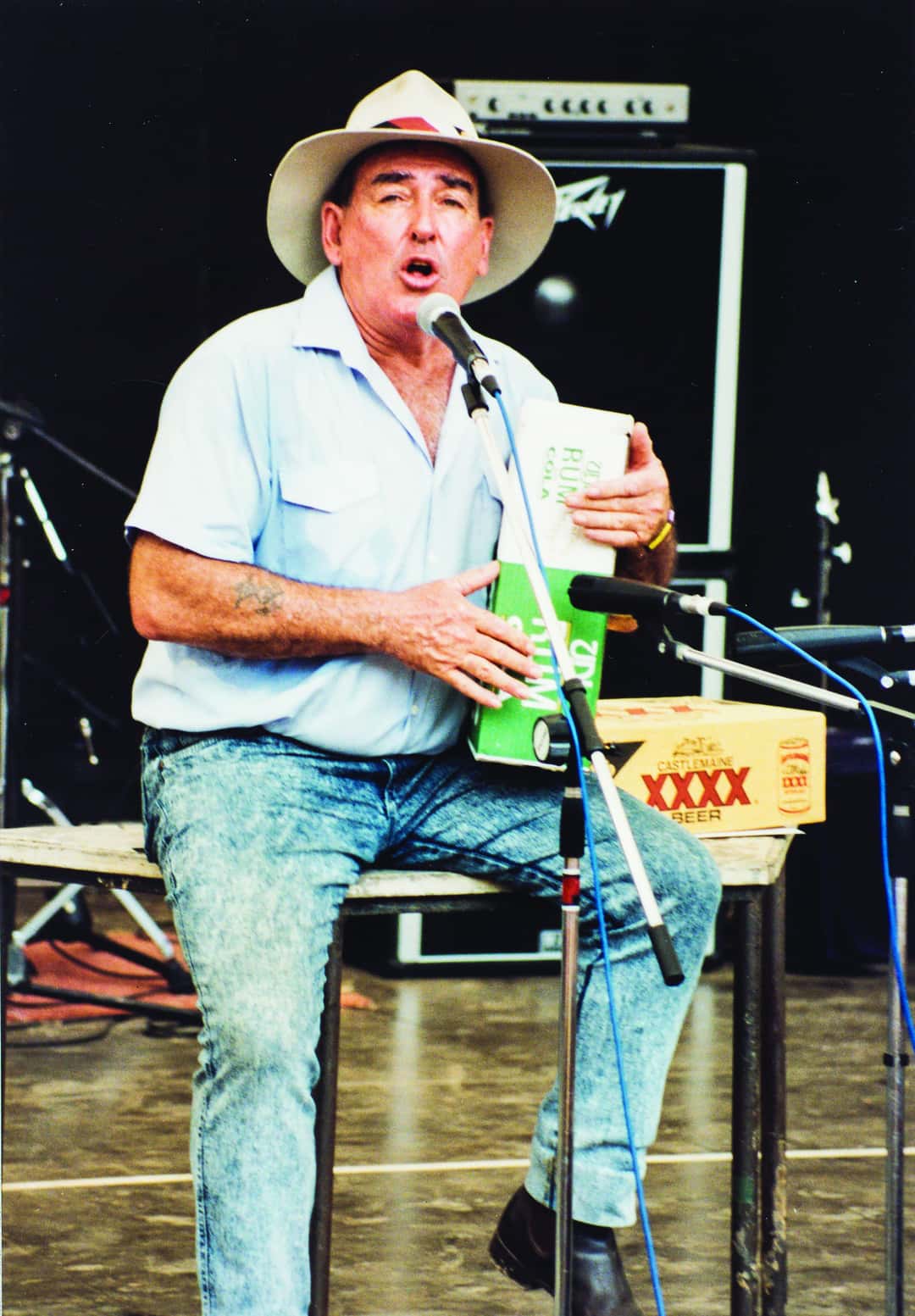
Long before 'Territory music' was a recognised thing, Ted Egan was already living it. A storyteller, folklorist and balladeer, he spent decades turning the lives of outback Australians - drovers, ringers, First Nation's stockmen, working women - into songs that were both deeply personal and culturally essential. This photograph captures a man who understood that the Territory's stories deserved to be sung, loudly and honestly.
Ted Egan (1932-2023) was one of the Northern Territory's most beloved musicians, writers and public figures. Known for songs including “The Drover's Boy” - a quiet masterpiece about the unacknowledged First Nation's women of the droving era - he was appointed Administrator of the NT in 2003. He played the fosterphone. He told the truth. He is deeply missed.
Frank Yamma
Photo by David Hancock
Read more + Read less −
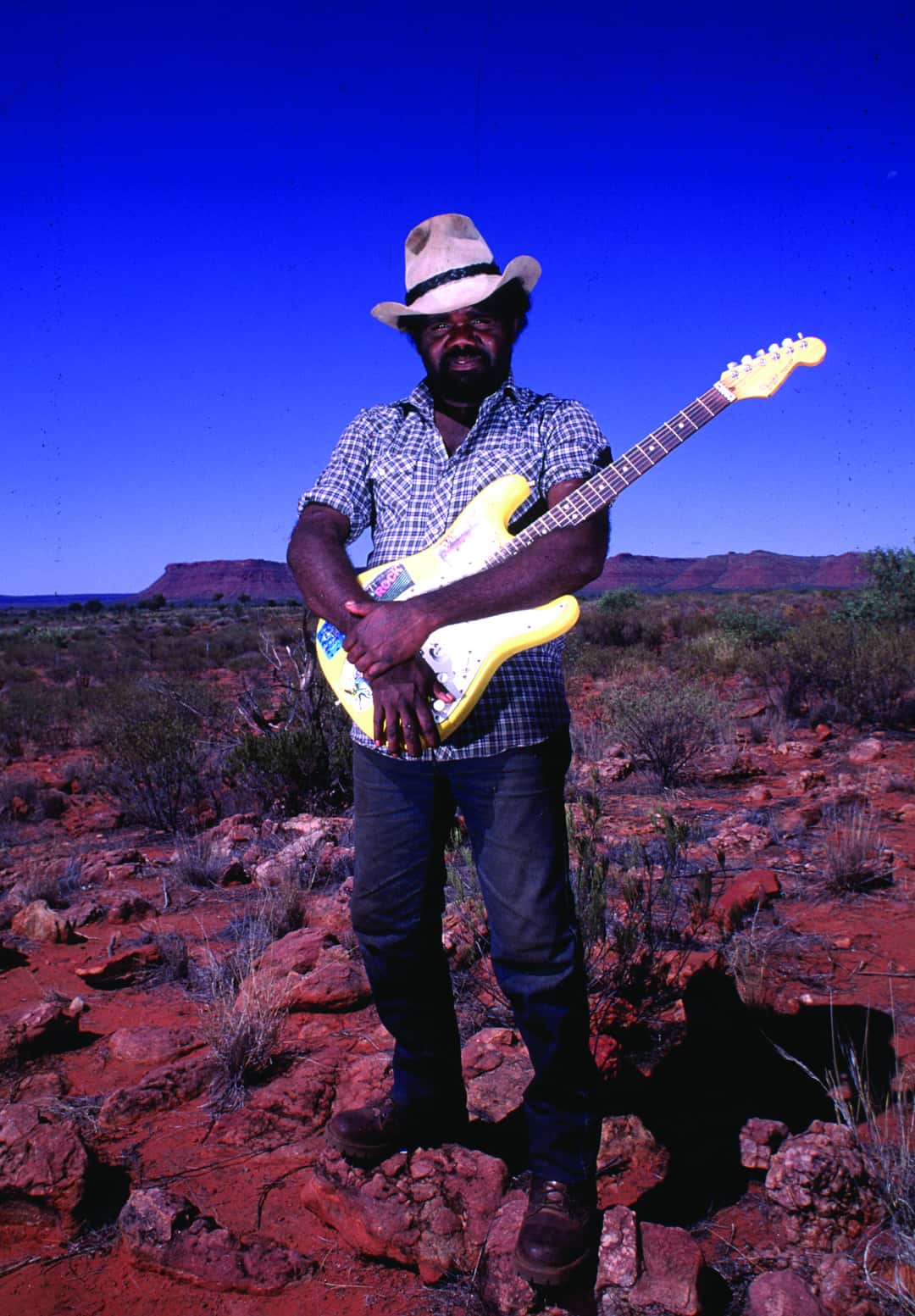
Out of the red desert country of the An-angu Pitjantjatjara Yankunytjatjara (APY Lands), Frank Yamma carries a voice shaped by generations. Son of the legendary Isaac Yamma, grandson of Ginger Mick - great names in An-angu music - Frank has inherited a lineage as deep as the country he comes from. David Hancock took this photograph on an outstation near Ntaria (Hermannsburg) for the international edition of Time Magazine - catching him in the stillness of the desert with his guitar.
Frank Yamma is a Pitjantjatjara man from Mimili in the APY Lands whose music carries the weight of the Central Australian desert in every note. Recognised as one of the great First Nation's voices of his generation, he has performed at major festivals across Australia and recorded work that honours the deep musical heritage of his family and Country.
Jeremy Whiskey
Photo by Renae Saxby
Read more + Read less −
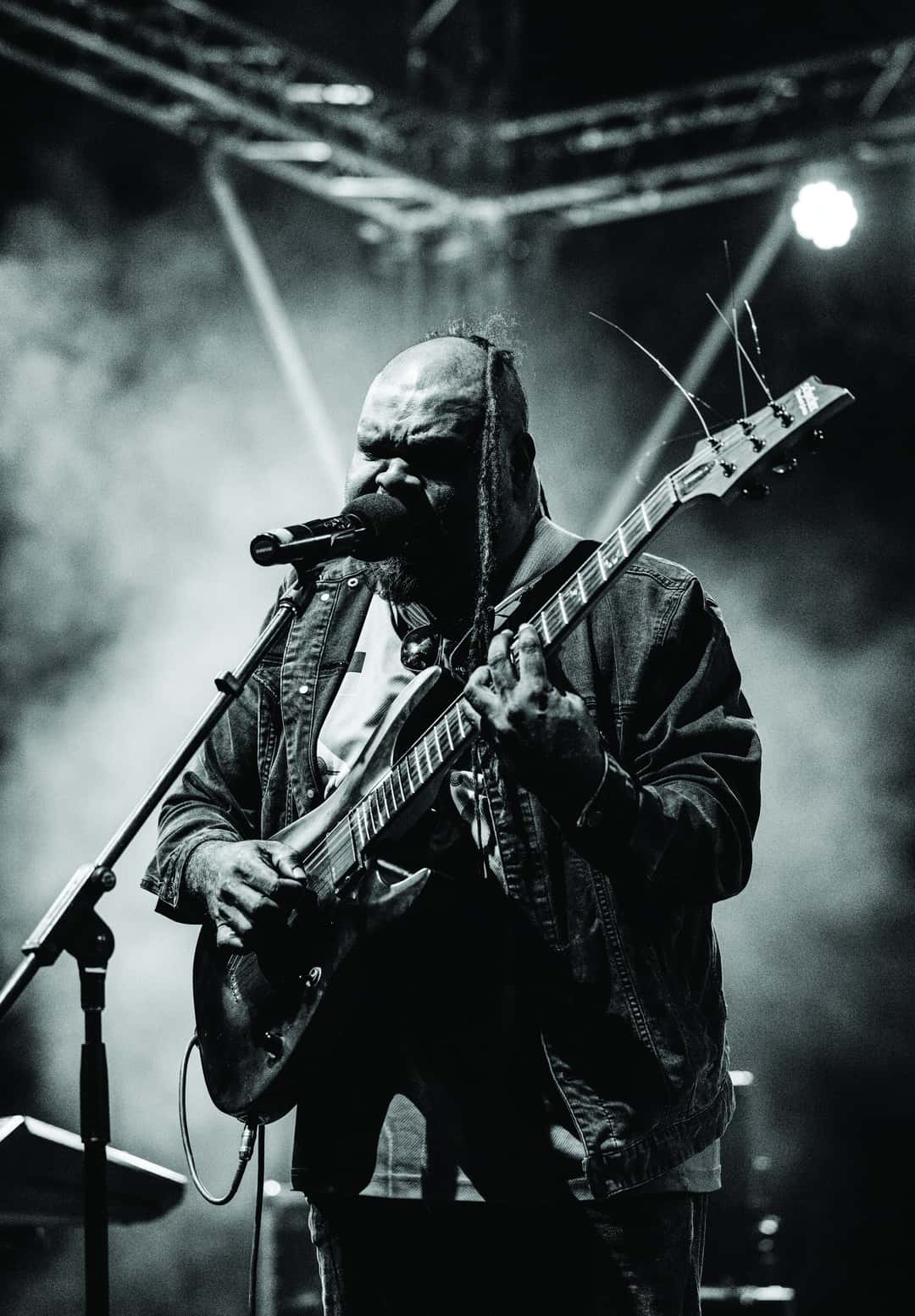
Photographer Renae Saxby captures desert rock virtuoso Jeremy Whiskey in his element on stage at the Bush Bands Bash in 2022. Rendered in dramatic black and white, the image crackles with high-voltage energy as Whiskey riffs. Saxby's lens beautifully captures the raw intensity of contemporary desert rock, framing heavy metal and rock instrumentation as a dynamic, modern vehicle for storytelling in Central Australia.
Hailing from the Indulkana community in the An-angu Pitjantjatjara Yankunytjatjara (APY Lands), Jeremy Whiskey is a celebrated Yankunytjatjara and Pitjantjatjara musician renowned for his lightning-fast guitar work. First rising to prominence with the award-winning desert rock band Iwantja, he has spent decades shaping the contemporary First Nations music scene. Continually pushing sonic boundaries, Whiskey fuses heavy riffs with cultural storytelling, cementing his legacy as a legendary force in the modern desert soundscape.
Yothu Yindi
Photo 1 by Alan James; Photo 2 Photographer Unknown (diptych)
Read more + Read less −
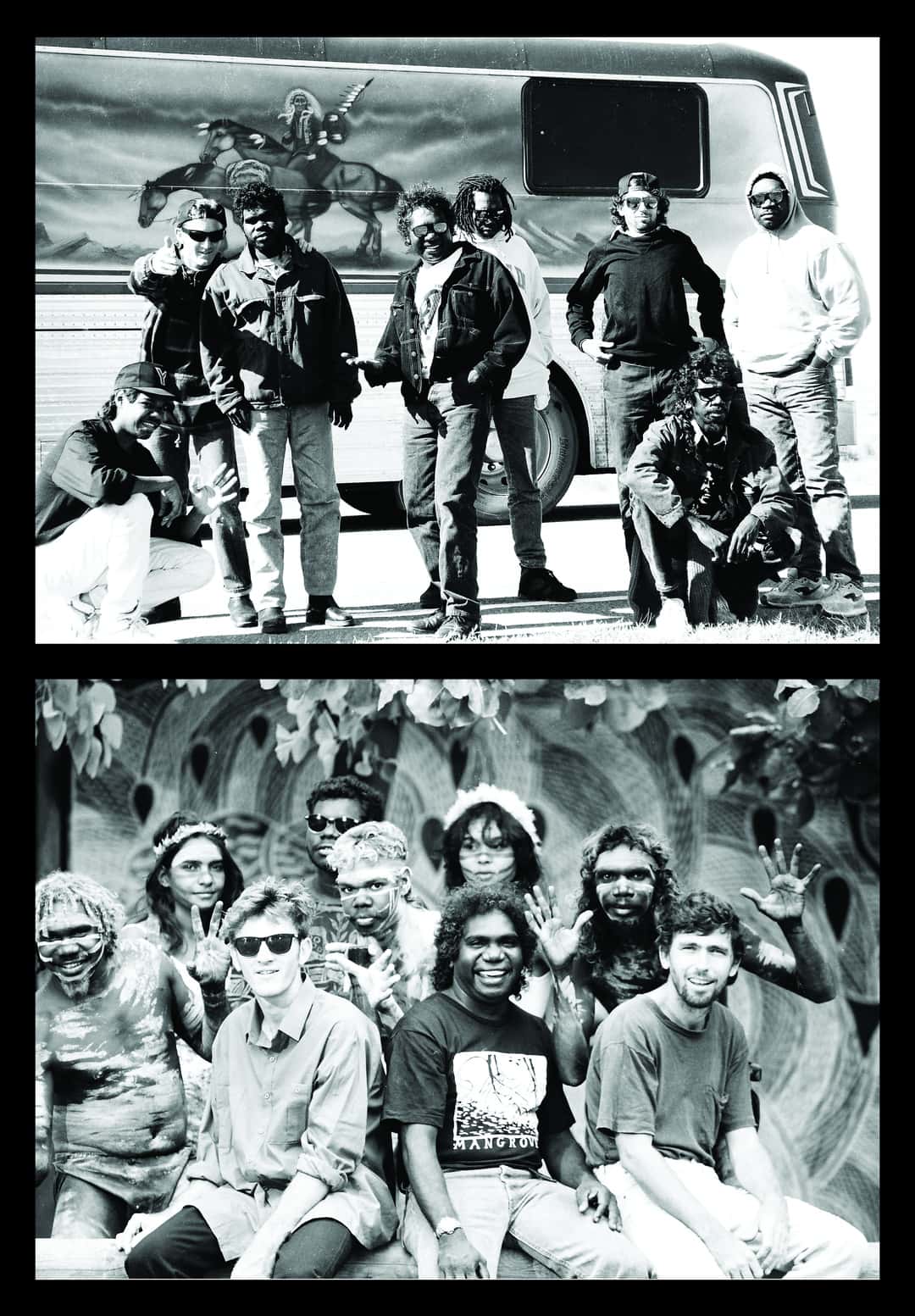
When Yothu Yindi took the stage, they carried something that transcended music - a declaration, a dialogue, a bridge between worlds. These two photographs - one by Alan James, the band's manager, the other by an unknown photographer - capture the raw presence of Mandawuy Yunupingu and his bandmates: a Yolŋu rock group from Northeast Arnhem Land who rewrote the rules of what Australian music could be. These are images taken from the inside of something extraordinary - a band on the road, mid-ascent, captured by someone who knew exactly what he was witnessing.
Formed in 1986, Yothu Yindi brought Yolŋu song, language and ceremony into the heart of Australian rock. Their 1991 recording “Treaty” became an anthem of the reconciliation movement and one of the most significant songs in this country's history. Led by Mandawuy Yunupingu, they proved that the oldest living musical tradition on earth could also be its most urgent.
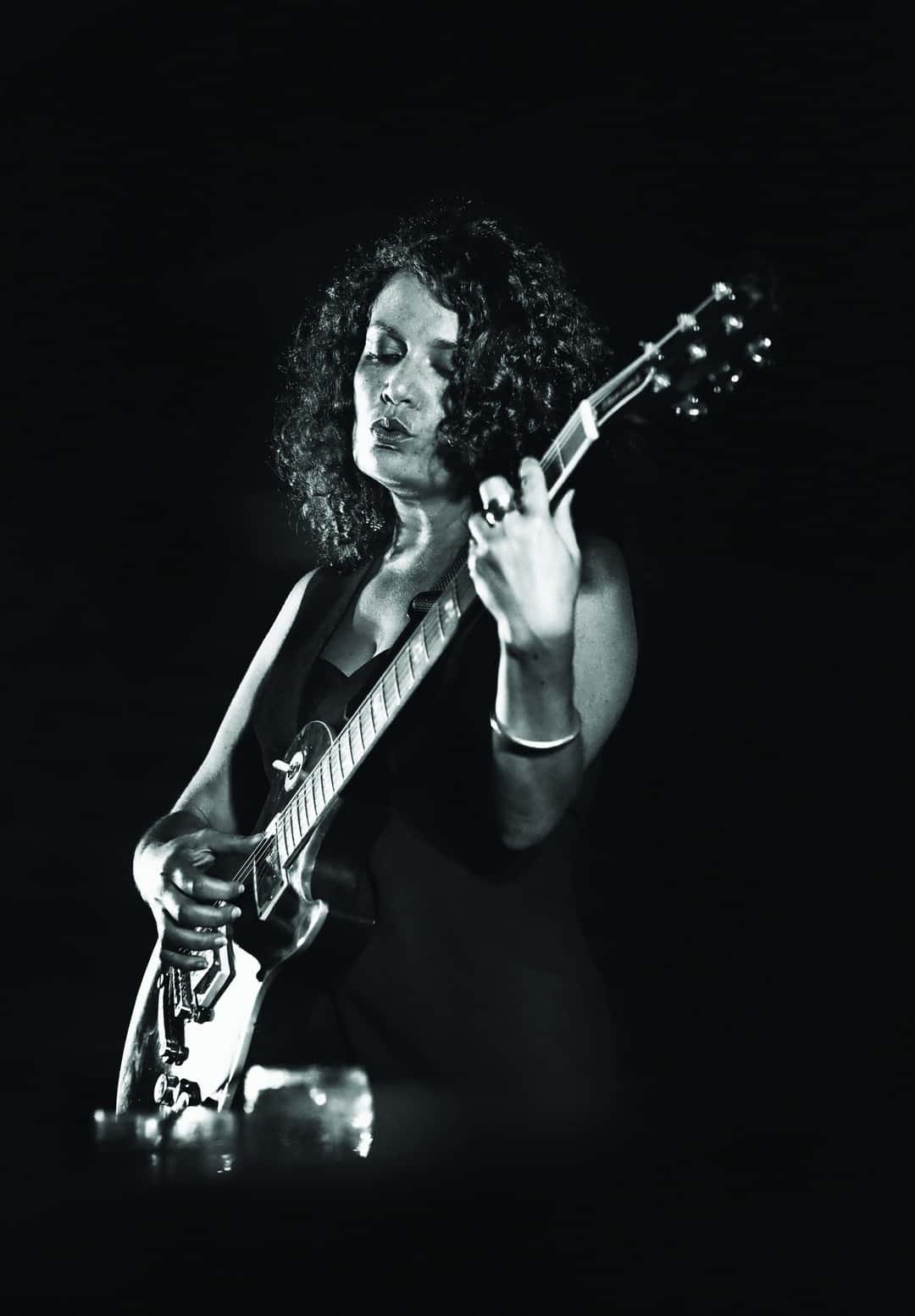
Leah Flanagan
Photo by David Hancock
Read more + Read less −
Leah Flanagan grew up in Darwin with Alyawarre, Italian and Irish heritage, and trained classically at the Elder Conservatorium in Adelaide. She has released five studio albums, and her career spans many national and international tours and collaborations. Most recently touring as a backing and featured vocalist with Midnight Oil on their farewell world tour. David Hancock photographed Leah here at the Railway Club, a well-loved room that has shaped many Darwin-born careers, including her own.
Leah is a Darwin singer-songwriter and one of the most important advocates for First Nation's artists in Australia. As a Director at APRA AMCOS, she is a driving force behind ICIP strategy in music rights management and works to ensure First Nations musicians own and control their cultural and intellectual property. Her music carries the same conviction - honest, warm, and entirely her own.